

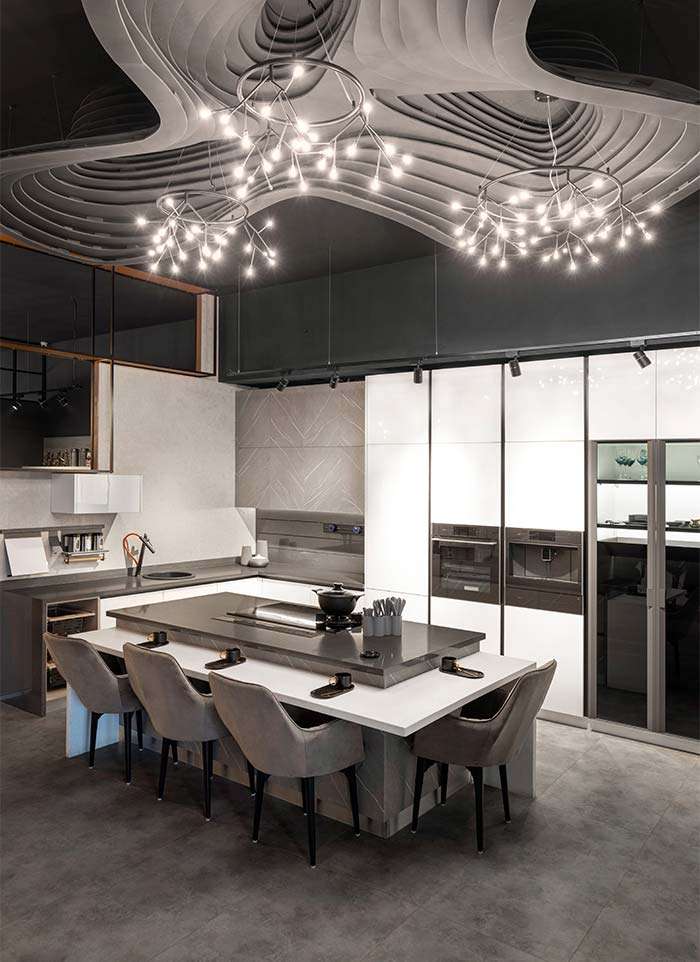


Kitchen display with an island and dining seating at the ALEA experience centre

Kitchen care

Looking after your kitchen.

Plain maintenance guidance — what to use, what to keep away from a finish, and when a small thing is worth a phone call. Written as general guidance for kitchen materials, not as a condition of anything.

or ask us about your own kitchen — free, no obligation

GENERAL CARE GUIDANCE / 10-YEAR WRITTEN WARRANTY / Hettich and Blum HARDWARE AS STANDARD

Every day

Three habits do most of the work.

A kitchen is not kept by deep cleaning it twice a year. It is kept by what happens in the thirty seconds after something spills.

Wipe it when it happens

Nearly everything that damages a kitchen is water, oil or something acidic that was left sitting. A spill dealt with in the moment is a wipe; the same spill found the next morning is a stain, and at a panel joint it can become a swelling.

Spray the cloth, not the shutter

Spraying a cleaner straight at a cabinet puts liquid into the edges, the joints and the hinge cups, which is exactly where you do not want it. Dampen a soft cloth instead and work from the cloth.

Finish dry

A second pass with a dry, clean, soft cloth is the single most useful habit on this page. It takes off the film a damp cloth leaves behind and it stops water standing anywhere it can soak in.

What does not belong near cabinetry

This holds for kitchen furniture generally, whatever the finish. If you are dealing with something stubborn, more time with a soft cloth beats more force with a harder one.

  • Scouring pads, steel wool and scouring powders — they abrade the finish along with the mark.
  • Bleach, thinner, acetone, nail-polish remover and strong degreasers.
  • Melamine foam “magic” erasers, which work by abrasion even though they feel soft.
  • Steam cleaners, which push hot moisture into edges and joints.
  • Water left standing anywhere — a joint, an edge, a cut-out, the counter lip above a shutter.
  • A wet cloth hung over a shutter or a drawer front to dry.

By surface

Different finishes, different handling.

What follows is general guidance for each material type, not a statement about what is on your kitchen. The finishes actually fitted to yours are named, line by line, on your itemised quotation — and if you are not sure which you have, ask us and we will tell you.

Sculpted stone counter and pendant lighting at the ALEA experience centre Display
Sculpted stone counter / ALEA experience centre — come and see the finishes in person

Laminate

The most forgiving of the finishes and the easiest to live with. Its weak point is not the face of the panel — it is the edges and joints, where water can find a way in and sit.

General guidance — Laminate
Do Avoid
Warm water, a soft cloth and a drop of mild dishwashing liquid Scouring pads, steel wool and scouring powders
Dry the panel afterwards, edges and the underside of handles included Bleach, thinner, acetone and nail-polish remover
A trivet under hot vessels rather than the panel or the edge Water left standing along a joint, an edge or a cut-out

Acrylic and high-gloss

A mirror finish shows everything, so the enemy here is grit rather than dirt. Most marks on a gloss shutter are put there by dust dragged across it on a dry or reused cloth, not by the cleaner.

General guidance — Acrylic and high-gloss
Do Avoid
A clean, soft microfibre cloth, rinsed often Circular scrubbing, which is what leaves swirl marks
Mild soapy water, then a dry microfibre cloth in straight strokes Abrasive creams, powders and solvent-based polishes
Lift dust off first, so nothing gritty is dragged across the face Reusing the cloth that just did the hob or the floor

PU and matt

A matt surface hides fingerprints beautifully and shows patchiness instead. The trick is to clean the whole panel face rather than the one spot you noticed, so the finish stays even across it.

General guidance — PU and matt
Do Avoid
A soft damp cloth, blotting a mark before scrubbing at it Alcohol-based sprays, solvents and strong degreasers
Cleaning the whole panel face, corner to corner, then drying it Abrasive creams or hard rubbing on one spot
Testing anything unfamiliar somewhere out of sight first Wax or oily polish, which leaves shiny patches on a matt face

Glass

Glass shutters and back-painted glass clean up quickly, but the coating and the silicone joints at the edges are less robust than the face. Work inward from the middle and keep liquid away from the perimeter.

General guidance — Glass
Do Avoid
A little warm soapy water, or a mild glass cleaner on the cloth Blades, scrapers or anything that can chip an edge
A dry lint-free cloth to finish, so nothing dries in streaks Ammonia-heavy cleaner on back-painted or lacquered glass
A soft cloth for anything stuck on, given time to soften first Spraying near the edges, seals and silicone joints

Stone and engineered quartz counters

Counters take the acids: lemon, tamarind, vinegar, wine, turmeric and hot oil. Natural stone and engineered quartz are not the same material and are not looked after the same way — some natural stones want periodic sealing, engineered quartz generally does not.

General guidance — Stone and engineered quartz counters
Do Avoid
Wipe acidic and oily spills promptly, then rinse and dry Descalers, lime removers, oven cleaner and bleach
Mild soap and water for everyday cleaning Abrasive pads and powders on a polished surface
A chopping board for cutting and a trivet under hot vessels A hot pan set straight down, or cutting on the stone itself

One rule covers all five: try anything unfamiliar somewhere it will not be seen — the inside of a shutter, the back of a cabinet door — before you take it to the front of your kitchen.

Open shelving and kitchen accessories on display at the ALEA experience centre Display
Shelving and accessories display / ALEA experience centre

Hinges and runners

Hardware asks for very little. Mostly, a clear track.

Hettich and Blum hardware is fitted as standard on every ALEA kitchen. The guidance below is general to soft-close hinges and runners of that kind.

  • Keep the runner tracks clear. Crumbs and grit under a runner are the usual reason a smooth drawer starts to feel notchy — brush or vacuum the track, then wipe it with a dry cloth.
  • Wipe hinges dry and do not let cleaner sit in the hinge cup.
  • Do not oil hinges or runners as a matter of habit. Soft-close systems are lubricated where they need to be, and household oil mostly collects dust.
  • Let a soft-close door or drawer close itself. Pushing it shut works against the damper, and over time the damper is what gives.
  • Load drawers low and even, heavy things nearest the sides rather than piled at the front. Runners have a load limit — if you are about to load a drawer heavily, ask us what yours will take rather than guessing at it.
  • If a door has drifted out of line, the hinge is adjustable — that is a call to us, not a job for force.

Moisture and air

In an Indian kitchen, steam and oil do more damage than dirt.

Frying, pressure cooking and a humid monsoon put more moisture and more airborne oil into a kitchen than most cabinetry is asked to deal with anywhere else. General guidance, and the reasoning behind it, so you can judge your own kitchen.

Run the chimney early and late

Switch it on before the pan gets hot and leave it running for a few minutes after you finish. The sticky film that builds up on shutters above a hob is mostly cooking oil that never got extracted. Clean the filters and the oil collector as often as the appliance manual asks.

Treat the sink cabinet as the hard case

It is the most hard-worked cabinet in the kitchen. Look under it now and then for a slow drip at the trap or the connections, dry the counter edge and the shutter below after washing up, and do not park a wet mop or a wet cloth inside it.

Give the monsoon somewhere to go

Air the kitchen for part of the day, wipe condensation off shutters rather than leaving it, and dry utensils before they go back in. Angle a pressure-cooker vent away from a shutter or a tall unit — a swollen edge is almost always steam or water that sat somewhere for a long time.

When to call us

Early is cheaper than later, and the call costs nothing.

Small misalignments are easy to put right and easy to ignore until they are not. If you see any of these, tell us rather than living with it — and rather than forcing it.

  • A door that has drifted out of line with its neighbour, or one that rubs
  • A drawer that no longer closes softly, or one that feels notchy on its run
  • A swelling, a lifted edge or a dark line near the sink, the hob or a joint
  • A handle, hinge or leg that has worked loose
  • A shutter that no longer sits flush when it is closed

Tell us what you are seeing and where — a photograph on WhatsApp usually saves a conversation.

Phone +91 95549 95449
WhatsApp +91 95549 95449
Warranty 10 years, in writing
We work across Panchkula, Chandigarh, Mohali, Zirakpur

Every ALEA kitchen carries a 10-year warranty, in writing. What it covers — and what it asks of you — is set out in the written document handed over with your kitchen at installation, and that document is the authority rather than this page. Keep it with your itemised quotation, which names the finishes and the hardware on your own kitchen. More about the warranty

Not an ALEA customer yet? Ask to read the warranty document on your free design visit, before you commit to anything, and have a look at what we make while you are at it.

Questions

Asked after the kitchen is in.

How should I clean my kitchen shutters day to day?

As general guidance for kitchen cabinetry: a soft damp cloth, warm water and a drop of mild dishwashing liquid handles almost everything, and a second pass with a dry cloth finishes the job. Dampen the cloth rather than spraying the shutter, so cleaner does not run into edges, joints and hinge cups. Keep scouring pads, scouring powders, bleach, thinner and acetone away from cabinetry altogether. Different finishes want slightly different handling — the finish on your own kitchen is named on your quotation, and if you are not sure which you have, ask us and we will tell you.

Can I use a steam cleaner, a scouring pad or a magic eraser on my kitchen?

As general guidance, no to all three on cabinetry. A steam cleaner drives hot moisture into edges and joints, which is the one place a panel is vulnerable. A scouring pad and a melamine foam eraser both work by abrading the surface, so they take the finish off along with the mark — on a gloss or matt shutter that shows immediately. A soft cloth, mild soapy water and a little patience will get further, and anything unfamiliar is worth testing somewhere out of sight first.

My drawer has stopped closing softly. What should I do?

Start by clearing the runner track: crumbs and grit under a runner are the usual reason a smooth drawer starts to feel notchy or stops pulling itself shut. Brush or vacuum the track and wipe it with a dry cloth. Do not slam it and do not force it — a soft-close system works against you when it is pushed. Most household oils are the wrong answer too, because they collect dust. If it still does not close properly, call us rather than dismantling it: hinges and runners are adjustable and serviceable. ALEA fits Hettich and Blum hardware as standard.

What does the ALEA warranty cover, and how do I use it?

Every ALEA kitchen carries a 10-year warranty, in writing. What it covers, and what it asks of you, is set out in the written document handed over with your kitchen at installation — that document is the authority, not this page. Keep it with your itemised quotation, which also names the finishes and hardware on your kitchen. If you have not received a kitchen from us yet, ask to read the warranty document on your free design visit, before you commit to anything. To raise something, call +91 95549 95449 or message us on WhatsApp.

Something not answered here? Get in touch — we would rather you asked than guessed.

Book a free design visit

Planning a new kitchen, or asking about the one you have?

Both visits are free and carry no obligation: a measurement at your home across Panchkula, Chandigarh, Mohali, Zirakpur, or a factory visit at Raipur Rani, Panchkula district where you can watch kitchens being built before you pay a rupee. Bring your questions about finishes and hardware — that is the easiest way to settle them.

Book your free visit

Free / no obligation / Panchkula · Chandigarh · Mohali · Zirakpur

    We use your details only to arrange your visit and estimate.